>>>>
Showing posts sorted by relevance for query bias binding tutorial. Sort by date Show all posts

Friday, August 05, 2011

Cutting Bias Bindings!

The other day I got a comment on my Binding Tutorial that read:

“How can you figure out how much binding/yardage you will need for a quilt when you are making BIAS BINDING? I have seen the chart for straight binding, and that's great, but how do you figure out the measurements when you're cutting bias binding??”

Quilts with curved edges require bias binding so the binding fabric will easily move around the curve without cupping and puckering. And sometimes, a stripe or plaid look BETTER cut on the bias than on the straight for the effect that you want. I’ve also been told that bias binding doesn’t wear out as quickly because the straight of grain is not on the edge of the quilt. It’s stronger.

((This pic is the BACK side of a quilt that is being released in a German magazine coming up, I can't show the front yet!))

This is MY take on the situation and how I choose to work with things, even though there may be other ways, other methods, other books, other tutorials, other charts for cutting squares etc. on the subject. This is just me sharing me....and a bit of why I do what I do and why it works for me.

The challenge with cutting bias binding comes in the calculation -----Usually a square is cut from the fabric, the square cut on the diagonal, and the pieces rotated and joined back together into a parallelogram. Lines are drawn, pieces are offset, and re-sewn into a tube, and then the tube is cut on the line with scissors.

The problem with this is that if you are "offsetting" your lines, aligning the top line with the line 2” below it --- your bias binding is not really on the “TRUE” bias. And you have to cut all that bias by hand with scissors after your tube is sewn together. To me the process is awkward.

And sometimes it doesn’t WORK for me to cut a big honking square of fabric! What if I want to bind a quilt that says that I need a 29” x 29” square? And I only have 1/2 a yard that measures 18” X 42”? Can’t I make better use of the fabric that way?

First off, you need to know the perimeter measurement of your quilt. Side + Side + Top + Bottom. And just to be safe, I add another 12” to that measurement. I need to figure the excess I need to miter corners and join the binding ends within that measurement.

And it also helps to think of standard quilt sizes when planning binding. That way I can figure out in my head based on the following what I’ll need:

Inches required for STRAIGHT EDGED QUILTS ((Curved and scalloped edge quilts will require more, plan accordingly))

Twin: 68” X 90”. Perimeter measurement + additional 12” = 328” 0f binding needed.

Double: 80” X 90”. Perimeter measurement + additional 12” = 352” of binding needed.

Queen: 90” X 108”. Perimeter measurement + additional 12” = 408” of binding needed.

King: 110” X 110”. Perimeter measurement + additional 12” = 452” of binding needed.

So these are my ball park figures that help me decide what size of fabric yardage to start with.

The more narrow the bias binding, the easier it hugs the curves and the better it looks in my opinion, so I tend to cut my bias at 2” for a binding that finishes at a snug 1/4”. I know some people like 3/8” binding and want to cut it at 2 1/4”. Just do a small recalculation using the following formula and it should work for you!

So here we go! Are you ready? ((Click HERE for Printer Friendly Version!))

1.) Measure the perimeter of your quilt and add 12". Divide this number by 42 (assuming about 42" of usable width on 44/45" wide yardage) and round up to the next even number.

2.) Multiply this number by your desired cut strip width . This final number is the length of the rectangle needed to make your continuous bias binding strip.

For example:

  • Quilt measures 71" x 90"
  • Perimeter = 71+90+71+90 = 322 and add 12" for a total of 334"
  • 334 divided by 42 = 7.95 Round this up to 8
  • 8 x 2 (for 2” binding strip width) = 16
  • You'll need a 16" x 42" piece of fabric for the binding

So I can get that bias binding out of a 1/2 yard of fabric instead of having to cut a 29” square!! That’s a much better use of the fabric, don’t you think?

You can use your own measurements in the formula above for figuring out your OWN needed size! Try it, it’s easy!

binding_1

This is my drawn piece of yardage!

cottoncandy 018

This is my actual piece of yardage! Fold one end of the rectangle over and align the edge like this:

biasbinding2

I leave the fabric folded, and use my scissors to cut along the fold like this:

cottoncandy 019

This is my TRUE bias. You can see I’ve placed a couple of pins away from the fold to keep things from shifting as I cut….And yes, there is a piece of green fabric tied to my scissors to warn any family members that these are FABRIC SCISSORS ONLY!

biasbinding3

Move the cut off triangle to the other end of the rectangle, and sew the selvage edges together. Press this seam open.

Here it is on MY fabric:

cottoncandy 020

Yes, I was making LOTS of purple bias binding! I was binding scallops, so I had to calculate in extra length. This is a fairly LARGE cut of fabric for that reason, but the method is the same!

binding_3_1

At this point, to keep the true bias, I just cut strips the width that I need from the bias edge of the parallelogram. You CAN do the drawing all the lines 2” apart, and sew the whole thing into a tube by offsetting it one line, and then cut with scissors on the lines to have it all in one length, but remember….it’s just “THAT MUCH” off the true bias if you do. And I find that the ability to fold the piece, use my rotary cutter to quickly cut strips, and seam them end to end is actually a faster process for me.

If you want to view the “tube” method with squares, go HERE.

cottoncandy 021

My 12.5” ruler isn’t long enough…I like this 14” one with it’s easy to read big numbers!

cottoncandy 022

When joining the strips end to end, be sure to overlap and leave dog ears at each end. Your stitching should come out right at the “V” in between the two pieces of fabric. Press seams open!

Applying the binding to straight edges is the same as with straight cut binding. You can visit my Binding Hints page to see how I apply binding, miter corners, and join ends.

I plan on doing a curved binding tutorial when time allows! I know I’ll need to have one in place when the quilt I have in the German Magazine is released…so be watching for it!

Thursday, November 03, 2011

Zuckerwatte Quilt & Curved Bindings!


This tutorial is being written as an extension of a Quilt pattern that recently appeared in the September 2011 Patchwork Gilde Magazine in Germany! Remember I showed you the back of this quilt?

zuckerwatteback1

I was unable to show you the FRONT until it appeared in the magazine! And the Magazine is HERE!

cottoncandy 050

Zuckerwatte is the German name for Cotton Candy, and this quilt, with its pinks and purples just have a Zuckerwatte feel to me! Are you surprised that there are more STRINGS in this quilt? I’ve been on a bender to use as many strings as I can in as many different ways that I can this year!

cottoncandy 058

You can find the pattern in the Patchwork Gilde Magazine! It’s the September 2011 issue, and it just arrived in my hot little hands this week! Yummy!!

cottoncandy 059

Along with the pattern for the quilt, is an article/interview from my workshop at Nadel und Faden in Stuttgart!

cottoncandy 060

I have such fond memories of being in Germany!! I wish I could read the text---but it is all in German! But look close at the right hand page….do you see what the underlay image is?

cottoncandy 061

It’s a very very light wallpaper effect of my traveling hexagon quilt! Yep, that went to Germany with me too! ((If this quilt could talk ---huh?))

If you would like to win a copy of Patchwork Gilde Magazine, leave a comment below and I will be drawing 2 winners!! Let’s leave this open for a while. I’m leaving on a cruise and I won’t be back until the 13th to draw --- but we will draw when I get home!

Now..the whole reason why this post is here --- there wasn’t room in the magazine to do the whole tutorial on the curved binding. And it is directing people to my website to find the tutorial! And I need to get it up here-----

Adding Gently Curved Bindings!!

The first thing you need to do is hop over to the Cutting Bias Bindings Tutorial to get your bias binding ready!

After quilting, stay stitch close to the edge of the outer border and trim the excess batting and backing away.Do not cut your curves yet! We'll mark the border, draw some lines, use the lines to place our binding, and trim later ----

Paper Templates!

I know there are many “tools” out there for getting even scallops, but all I need is a small plate and some extra paper!

Corner Template!

This is the first template we need to make, and because our borders were cut 5.5” before adding them to the quilt, we can do this out of a 6 1/4” square! If your border is wider or narrower than this, adjust the size of the square as necessary.

cottoncandy 067 cottoncandy 066

Start with a 6 1/4” square and fold it in half. Find a plate/saucer that will fit in the corner and give you the size of corner curve you would like…I just hit my china cabinet to come up this one. Lay the plate, pot lid, circle in the corner over the fold and draw a partial circle.

Decide “HOW” shallow your scallops are going to be….the shallower they are the easier they are to bind without cupping.

cottoncandy 068 cottoncandy 069

I wanted my scallops to be less than one inch deep and used that measurement to extend the line from my partially traced plate curve out to the edge of my square. Fold the square back in half, and cut out your corner template…..then snip a little 1 1/4” square out of the bottom corner of the paper square. This is where your template will line up on your inner border…

cottoncandy 023

This is how your paper will lay in the corner! You can adjust it as needed by refolding and trimming as desired.

Side Template!

cottoncandy 070 cottoncandy 071

Cut a 5” X 6.5” rectangle from scrap paper. Fold it in half. Using your plate, draw a gently curved edge at the top of the paper, and extend your shallow curved lines to the edges, wherever you think you would like your depth to be. Fold the paper back in half, and cut on the line. These are my two paper templates. You can see where I corrected that too-deep line on the corner by folding and trimming! Because the corner and the side piece are separate from each other, we can fudge the distance between scallops as needed when we draw the lines on the quilt border!

cottoncandy 072

I know I’ll be using these again, so I went and cut them out of left over template plastic! My first line wasn’t quite round enough and my corner piece was corrected when I trimmed. You can do it!

cottoncandy 024

Using chalk, a blue marker, or a pigma pen ---Yes, I used a pigma pen!!--- Trace your corners on to your quilt, and then using the side template, trace your curves on each border, adjusting the template to fit by sliding it closer together or farther apart as needed. This is very forgiving! If you want, you can start at both ends and work toward the center of each border length to keep things more symmetrical.

cottoncandy 025

Starting at the TOP of a scallop, part way down one quilt side, lay the folded bias binding with raw edges up against your drawn line. Start sewing, leaving about 4” of tail on your binding unsewn behind the presser foot. We’ll fix that later!

I use my regular presser foot to do this…the quilt is already quilted well, and my walking foot obscures my view for sewing a 1/4” binding. Stitch slowly, and try not to stretch the binding around the curves as you go. Think only a few inches ahead of where you are. Deal with each curve as you get there. You might have to lower and raise your presser foot to readjust the binding to fit easily around the curves. Don’t race! Take your time…it’s worth it!

cottoncandy 026

Here is a whole length of binding attached to the quilt, and the edges will be trimmed later!

Continue around the whole quilt until you reach a few inches from where you began. To join the ends of your binding, follow my directions on my straight edge binding tutorial HERE! You’ll have a nice invisible join with no lumps or bumps!

cottoncandy 036

Here is the binding, with the quilt edge trimmed 1/4” from the seam line! I’m ready to begin the handwork of stitching it down!

cottoncandy 034

I bind my quilts using the “ladder stitch” --- making the stitches completely invisble when finished! To do the ladder stitch, take a small side-ways stitch in the fold of the binding. Directly below where the thread exits the binding, take a small side ways stitch just below the machine stitching line. Move the needle back up directly above where the needle exited the quilt backing, and do another side ways stitch hidden in the fold of the binding.

Ladder Stitch:

You’ll notice that the quilt backing is facing me…and my fingers roll the binding down and over the edge of the quilt. I don’t even use those “hair clip” binding clips or pins!, I don’t NEED them….My fingers do the work for me! Pins and hair clips are just one more thing for me to lose ;c)

Zuckerwatte will be making its appearance in ENGLISH as a feature in my next book due out in July 2012. Copies of Patchwork Gilde are available across Germany, perhaps you can find someone who can pick you up a copy!

Or, you can leave a comment below to win one of two free Giveaway copies! I’ll draw for them upon my return from the cruise with Pat Sloan ---but give me a couple days to rest up, I think I’m going to need it!

Wednesday, November 14, 2018

And Around the Next Corner….

1_A6_I_6aRSPR7Q87xO639BQ

If you were to look up my life in the dictionary -

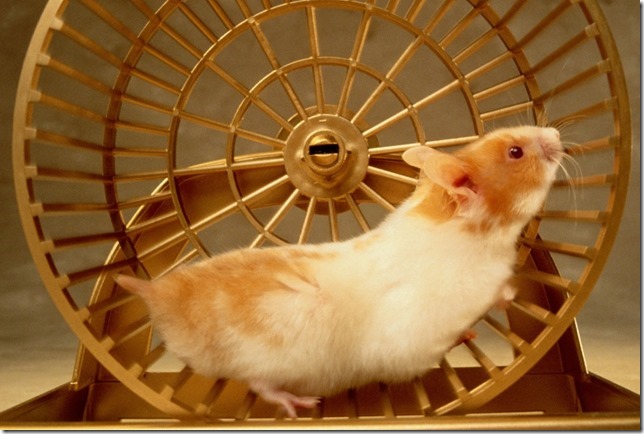
This would be the photo!

My yesterday caved in on itself.  Or got nowhere while I ran like the proverbial hamster on the wheel.

Somewhere, somehow – I got completely derailed.

The phone rings yesterday at 11am asking me if I am coming in for my dentist appointment.  I said “Yes, tomorrow.”  They said “No, today.”  I said………that’s not what’s on my phone calendar!

And I checked.  And somehow I got their Tuesday mixed up with what was on my calendar for MY Wednesday.  That appointment has been rescheduled for JANUARY as there are no openings in December.

The plan then, to go to Virginia for an overnight was scratched, and that gave me a bit more time to keep filling orders.

Later in the afternoon came another call from the chiropractor’s office “Are you coming in for your appointment?” They asked.  “Yes.  Tomorrow.” was my reply.  “We had you down for TODAY.” they said.

Thursday, January 09, 2014

Label Label Label!!!


squiltz: Quilt labels -cute ideas for them

How important is labeling your quilt?

VERY!!

I can’t say it enough. 

As a passionate lover of antique and vintage quilts, how often I come upon a beloved quilt in my travels with “maker unknown” attached to the price tag or the display information ---who were these unknown quilt makers?

While here at my Dad’s we started talking about things we remember.  He’s got a quilt I made him over 20 years ago.  HUGE variable stars –I recognize scraps in it from early early on in my quilting life – some of them being from clothing I made when I was first dating The Hubster – so I can safely say this quilt is between 1985 and 1990.  I can pinpoint in my mind the house I lived in and where I sewed when I was making it.

It’s not a great quilt.  It was before I really knew better, assumed broadcloth meant cotton – and  ended up with a poly/cotton backing on it that was a nightmare to machine quilt on what I am guessing at that time was a $100 Riccar ---

There is no label on this quilt.  ***hangs head in shame*** At the time I didn’t think it was important enough, that it would be used up to shreds and leave nothing for anyone to remember anyway –but the next time I come I am going to label it.

I have three quilts that have come down from my Grandmother’s side of the family --- and when she gave them to me, even SHE didn’t remember at the time who made them, whether it was her grandmother, her aunt or whoever ---within just a couple generations the history is lost.  I never knew the quilters-past who made the quilts that now live in my collection.  I only know that those who came before me, ahead of me in the family line of quilters, appliqued those leaves, pieced those squares and triangles, quilted that cross hatching by hand ---and left no label.

Maybe they thought their quilts would be used up until there was nothing left and it wouldn’t matter.  But it does to me.

So here I am with some label ideas for you!

MarksQuilt 015-001

The first one here is my go-to label.  I don’t even have to know what I’m going to write on it….It is just a square of fabric, any size square will do depending on how much info you want to write on it ---this one I believe is 6-1/2”.  Simply fold the square in half. pin it in to the corner of your quilt, and sew it into the binding on two sides. 

Only one side needs to be hand stitched down, and that is easily done while you are stitching the binding down.

I keep a stack of folded and pressed squares near my machine --- when I’m putting a binding on, on goes the label.  This is the label that went on the back of Mark’s healing quilt. More info on that in this post HERE.

And then I went searching – to see what other ideas I could find that might inspire us all to LABEL!!

Word play quilt back - Fun idea - could be embroidered on

Scrabble Letters!  How awesome!  I have to say I really hate pinterest links that don’t link to the actual post you are looking for – this one only lead to the main address of http://www.cheekycognoscenti.blogspot.com/  I’d link to the post where she talked about the quilt label if I could find it, but the link only took me to the most recent post at the top of her blog.  But isn’t this a great idea?

Quilt label idea

Curved Bias Quilt Label by Seams Likely!

This is a really cute idea, and less obtrusive than the folded triangle label I showed above.  It has cute possibilities!

Handicrafty Sisters: More Boy Quilts - quilt label idea

Denim Pocket Repurpose from HandiCraftySisters!

LOVE this idea!

Labels - Love this idea

Dress up a label with mini blocks and parts!

These adorable labels are found in Like Mother, Like Daughter: Two Generations of Quilts by Karen Witt and Erin Witt, published by my own publisher, Kansas City Star!

Think about what you can do with leftover blocks and units from the quilt itself –use them up in creating a one of a kind label!

It doesn’t matter WHAT you do – in a pinch, and when the backing is plain enough to show the writing, I’ve written directly on the quilt back itself…there is no removing the label that way!

Even if you think your quilt is “not good enough” to worry about a label….

Even if you think that it will be used up with the loving and there will be nothing left for future generations to worry and wonder about….

LABEL LABEL LABEL!!

I’m off to the airport shortly.  My journey home begins.  I’ve had a wonderful two days with family, so very important.  Now I’m ready for my own bed, my own kitchen, my own place!

North Carolina, I’m coming home!


Click Here to like our Quiltville Friends Page on Facebook for more fun!
You do not need a Facebook account to read the Facebook posts - They are viewable to all! Feel free to read & quilt along with us!